
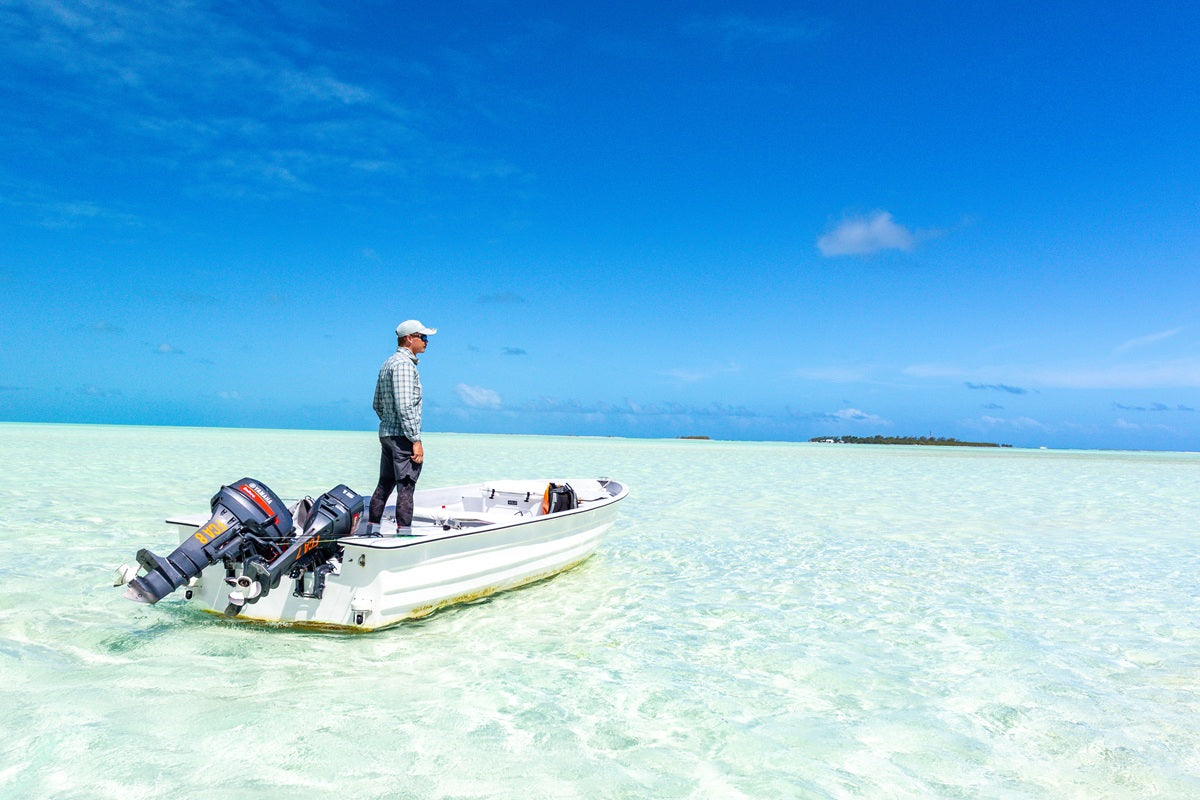
Jonathan Boulton first worked on Alphonse Island in 2003 and has been hosting trips to the atoll since then. Brendan Becker first guided on Farquhar in 2013, then onto St Brandons from 2015-2017 followed by Providence, finally hanging up his flats boots in 2023. Nic Isabelle began his saltwater guiding with FlyCastaway in 2015 on Farquhar Atoll. Between 2015 and 2019 I guided six seasons on Farquhar and two seasons on St Brandon’s Atoll, before moving to Providence from September 2019 to May 2024. This is a combined expletive experience right here and here is our take on it, from top to bottom.

When do you go?
Not an easy one…
Early season (Oct - Nov) sees the end of the south east monsoon season, with windy conditions starting to ease into flatter and milder conditions at the end of the year. Big predatory fish like GTs love cooler, oxygenated water and this can be a great time for them. Many atoll species are resident and although the atoll systems are vast, the ability of guides to pole skiffs, regardless of the stage in the tide, allows the guides to keep their skiffs on top of the fish for longer. One might then argue many of the atoll species have not seen any rod pressure and shouldn’t be gun shy early in the season. The pelagic fishery around these atolls is best this time of year, if you have a Sailfish on your target list, this is the time of the year to go.
The season at the beginning of the year sees the end of the cyclone season and while the weather is stable, you can still get larger low pressure systems moving across the Indian Ocean. Guides might not be able to get to where they want to get to, sometimes not even able to run at all. But if they can get their boats out, they might have to choose spots based more on the comfort and safety of the run, rather than where they actually want to be. At the end of the day the Seychelles is a sight fishery and having cloud and squalls make seeing fish next to impossible. As the season progresses weather settles, and late season can see those “magazine cover days” - blue sky, sunshine, no wind and the sky and sea become one.
Maybe the fish have seen more anglers at this stage of the year but guides can make long runs and bounce between a number of plans for their day. Long surf walks with settled sea conditions, gently forming waves, and excellent light penetration allows surfing Geets to be lined up from a mile.

Once your time of year is decided upon, what tidal cycle? Spring tides see bigger water movements, baitfish exposed and prime predatory fish time, yet shorter windows for the tailing and finning flats species. The fishing happens in windows as sea life moves in and out of the atolls, these periods are frenetic, and it’s important to make your shots count when they come. Springs also create great landmass fishing with the baitfish using the shallows around islands as the only form of cover on the higher stages of the tide. Neap tides have slower and less current movement allowing for longer time on the flats. The height of the low tide sees tailing species move onto the flats for longer periods. It is also a great tide for stingrays moving across the flats, and where there are stingrays there is a good chance there’s either a Geet or permit holding on its back. A classic Seychelles opportunity.
Preparing for the Flats: Gear, Tactics & Mindset for Indian Ocean Fly Fishing
When it comes to fishing remote flats and coral atolls in the Indian Ocean, it’s essential that you put in a lot of effort in preparation before the trip. The gear, the conditions, and the fish themselves demand a level of readiness that can make or break your trip. Here's a comprehensive look at the setup, strategy, and mindset that will put you in the best position to succeed on a flats adventure.
Rods: Why a 9wt and 12wt (and maybe a 10wt or 11wt)
A 9wt and a 12wt are the sweet spot for most of the tropical Indian Ocean flats. The 12wt is your go-to for powerful species like GTs and when fishing around gnarly coral edges. It’s got the extra grunt needed for turning heavy flies and keeping fish away from structure.
The 9wt, on the other hand, is your weapon of choice for big bonefish, triggerfish, and when stalking the shallows. It provides finesse without sacrificing power. Depending on the conditions, especially if the wind picks up or you're specifically targeting bluefin trevally, a 10wt can also be a valuable addition. A 10wt balances the casting of smaller baitfish patterns with 60–80lb leaders and gives you the upper hand on fish that come in hot and fast.
You may even come across milkfish – and while a 9wt can handle them, a 10wt tilts the battle slightly more in your favour.

Modern rod technology has come a long way, today’s high-performance graphite and composite blanks are remarkably light, responsive, and incredibly strong. This means anglers can use an 11wt to cast all day without fatigue, yet still deliver the large, wind-resistant flies GTs love to crush. An 11wt easily turns over big brush flies and poppers while maintaining the muscle needed to control these powerhouse fish in the surf or over coral flats. It might struggle with large beast flies that have become popular in recent years. It’s become a great option for fishing on more open flats with less structure or for smaller fish on stingrays.
We don’t recommend specific brands, we do however recommend you cast a bunch and try them out before. A 12wt is a beast, and you want something you are comfortable with and can cast well, not a pole to beat off stray dogs.
Fly Lines: Matching Taper to Target
Floating Lines
- 9wt: The Airflo Universal Taper Floating line is a fantastic all-rounder. Great taper, braided core, and reliable performance in flats scenarios.
- 12wt: The Airflo GT Gangsta Taper is ideal – aggressive, powerful, and designed to get bulky flies moving quickly. In GT fishing, casting efficiency can be the difference between connecting and coming up short. This Airflo line has a strong braided core as well, helping with the hook set and staying tight to fish during the fight.
Intermediate & Sinking Lines
Intermediate lines can shine when fishing off coral ledges or slightly deeper water. They help get the fly down a touch without compromising presentation. For serious dredging, especially in open water or channels, the Airflo Depthfinder Big Game 700g line is hard to beat. It's thin, has a braided core, and sinks fast which is key when you're trying to reach cruising fish in deep water. Every inch counts when it comes to dredging.
TAKE SPARES; flats fishing is a combat sport, sharks, coral and boat props, stuff will break, rather be looking at it than for it. Take spare rods, matching brand will help, if you are unlucky enough to break two you could “Frankenstein” a whole new rod from the parts. Any good, specialty fly shop should let you take 2/3 spare fly lines and then return them as long as the boxes aren’t damaged. Rather be looking at it than for it….!

Terminal Tackle: Fine-Tuning for the Fight
Leaders & Tippet
The most important point of GT fishing leaders is the fact that the breaking strain is not the most important factor, it’s the abrasion of the leader. Therefore we overcompensate and, because the GT’s don’t necessarily mind the thick leader, fish a monofilament leader that has a diameter of at least 1mm. The fish have big canine-like teeth, and sharp scoots on their tails as well, and they are very good at wrapping one up in coral, so heavy leader protects against this. We use monofilament for these big leaders because a hard fluorocarbon is hard to set the knots snugly and correctly and with GT fishing, you always want to control the controllables. The 100lb-130lb is important but 80lb fluorocarbon is worth packing alongside the heavier leaders. GTs can get leader-shy, and dropping down to 80lb can be the trick. It’s less durable, but often that trade-off is worth it. Especially in high-current dredging scenarios, the thinner diameter sinks faster and offers a better drag profile.
For the 9wt and 10wt setups, a tapered or furled leader with a solid butt section is essential. Consistent leader length is key for accuracy and stealth on the flats. Ideally, you're casting over the fish, opening the loop, and presenting the fly softly in their zone. There is a discernible difference in making the first cast the best cast, especially when it comes to the finickier fish like permit and triggerfish. Tippet size for the tailing fish species is very contextual to the location and conditions that you will fish, it’s always worth reaching out directly to your operator and confirming these detail, but a selection of 12-30lb fluorocarbon caters for all scenarios.

Boots, Bags & Sunglasses: The Underrated Essentials
- Boots: (Orvis Pro Saltwater Approach Hiker) Go one size up from your normal shoe size to accommodate swelling, neoprene socks, and long days on foot. Break them in before the trip.
- Rain Jacket: (Orvis Ultralight Wading Jacket) Absolutely vital – not just for rain, but for wind and spray during boat rides. You’d be surprised how cold the tropics can feel when soaked.
- Sunglasses: (Maui Jim) Bring two pairs – one with amber or green mirror lenses for high light, and another with yellow/low light lenses for cloudy days or dawn/dusk. Contrast is the most important visual aspect on the flats, you need a lens that is going to highlight the fish against the substrates and background.
- Sunglass strap: (Loop Retainer) Non-negotiable. Sunglasses vanish quickly out here.
- Waterproof your belongings: (Waterproof Bags) Everything gets wet. A good-quality waterproof backpack is essential.
- Prioritise sun protection: (SPF Clothing) Full-coverage clothing works best: long tights for the legs, skiff hoodies with built-in buffs, a cap or wide brim, and good-quality SPF.
- Pack gardening gloves and a pair of pliers with a side cutter. (Orvis Pliers) Useful if your guide is too far away and you need to unhook something with teeth or change flies.
- Gloves/Tape: (Orvis Sun Gloves) Stripping gloves are great, but finger tape gives more control and adaptability.
What to leave at home
- Rod holsters or homemade carriers. They cause more trouble than good. Your backpack’s waist belt and trouser pocket are the most reliable way to carry a second rod.
- Leave the chest pack, chest-mounted GoPro, or anything that can catch fly line. The big fish tend to appear when someone is wearing extra gear, and too often half the fly line follows the fish out to sea while your guide sheds a quiet tear.
Flies: Go Custom, Go Quality
The fly selection you've outlined is solid. That said, custom tying is the way to go. Saltwater species are unforgiving, and presentation matters. Hook choice, weight, and proportions are critical. These aren’t just flies – they’re tools, and every detail counts.

Guides and being guided
You are on the edge of the world, it means that you’re with somebody who has poured everything into making the experience the best they can for you. If you haven’t been guided before, it’s quite an intimidating thing, there are so many things to ponder. You have to remember that the guide almost exclusively wants the fish more than you do, it’s what gets them up in the morning. They are all unique and have their processes, this is what makes a flats fishing experience unforgettable. Try your best to combine your approach and thought process with theirs to become a unit, it makes the process so much easier, from the first step on to their boat, until the last.
It’s important to remember that here are cycles of activity in a fishing day. Instagram might tell you that the fish just fall on the fly nonstop but due to tidal movements, there are waves of action, you have to almost flow with these waves and conserve mental and physical energy as you go throughout a day and a trip. There will be quiet moments or sessions, but always remember, the guide wants them just as badly as you do!

The Mindset: Your Most Valuable Gear
More than any rod, line, or fly, your mentality will define your experience.
You’re stepping into an ecosystem, not onto one. You are hunting the apex predators of the flats, you have to realise that you are becoming the top of food chain out there.
-
Always fish forward. The action can come thick and fast during the day so the most important thing to practice is focussing on the shot that is going to come. You will miss chances, and sometimes its objectively really bad, but you have all the time at the end of the day to think about these, when in the heat of the action you have to force yourself to focus on the next shot, the next fish.
- Slow is smooth, and smooth is fast. This means that taking your time to do something carefully and with control leads to greater efficiency and speed in the long run. It applies to so many aspects of flats fishing, with one of the most important being the casting and presenting of flies.
- Practice casting. The flats are not the place to get comfortable with your gear. Be ready to focus on fishing the fly, not figuring out how to cast it.
- Safety first. Conditions change fast. Trust your gut if something doesn’t feel right. Always.
- Look after your feet. You can’t catch what you can’t reach. Comfortable, well-fitting boots are your first line of defense.
- Efficiency is everything. You want to cast just as well at 4 p.m. as you did at 8 a.m. Save energy. Stay focused.
- Stay mentally strong. You can’t control the weather or the fish – but you can control your attitude. Stay positive, adaptable, and ready. That’s the secret to making every shot count.
- Hook the fish, always. Flyfisher folk have an innate ability to mentally take themselves out of the game before the fly is in the water. Simply remember that’s its better to deal with problems like light leader and loose drag when you’ve got a fish hooked, always take the shot.
Final Thoughts
Flats fishing in the Indian Ocean is more than just an angling trip – it's an immersion into a raw and untamed world. With the right gear, a flexible approach, and a razor-sharp mindset, you're not just showing up, you're stepping into the apex tier of the oceanic and fly fishing experience.
Enjoy it, explore, and take as many photographs as you can. These places are rare and wild, and while the fishing is world-class, it is the setting itself that will stay with you long after the last cast.

Be interested, explore, and catch whatever you see. The angler who is having fun is the one who often crosses paths with the big GTs. Single-minded anglers get bored and complacent, rush the tidal plan, and end up missing the golden window of the day
When to go - To be fair the best time to fish the Seychelles is as soon as possible, control the uncontrollable's, use an established operator with the best guides and boats. Take the right gear and even consider booking with a host that has been fishing the various outer islands for 20 plus years.
Pack well. Train hard. Think smart. And remember, it always takes one cast to change everything on a flats fishing trip.
Photo's By : Nic Isabelle, FlyCastaway, & Mavungana Flyfishing